In Conversation: David Velasco and Kate Sutton
“There’s no path for the magazine to restore trust in its current ownership.” David Velasco and Kate Sutton reflect on the situation with Artforum and its Summer 2024 issue.
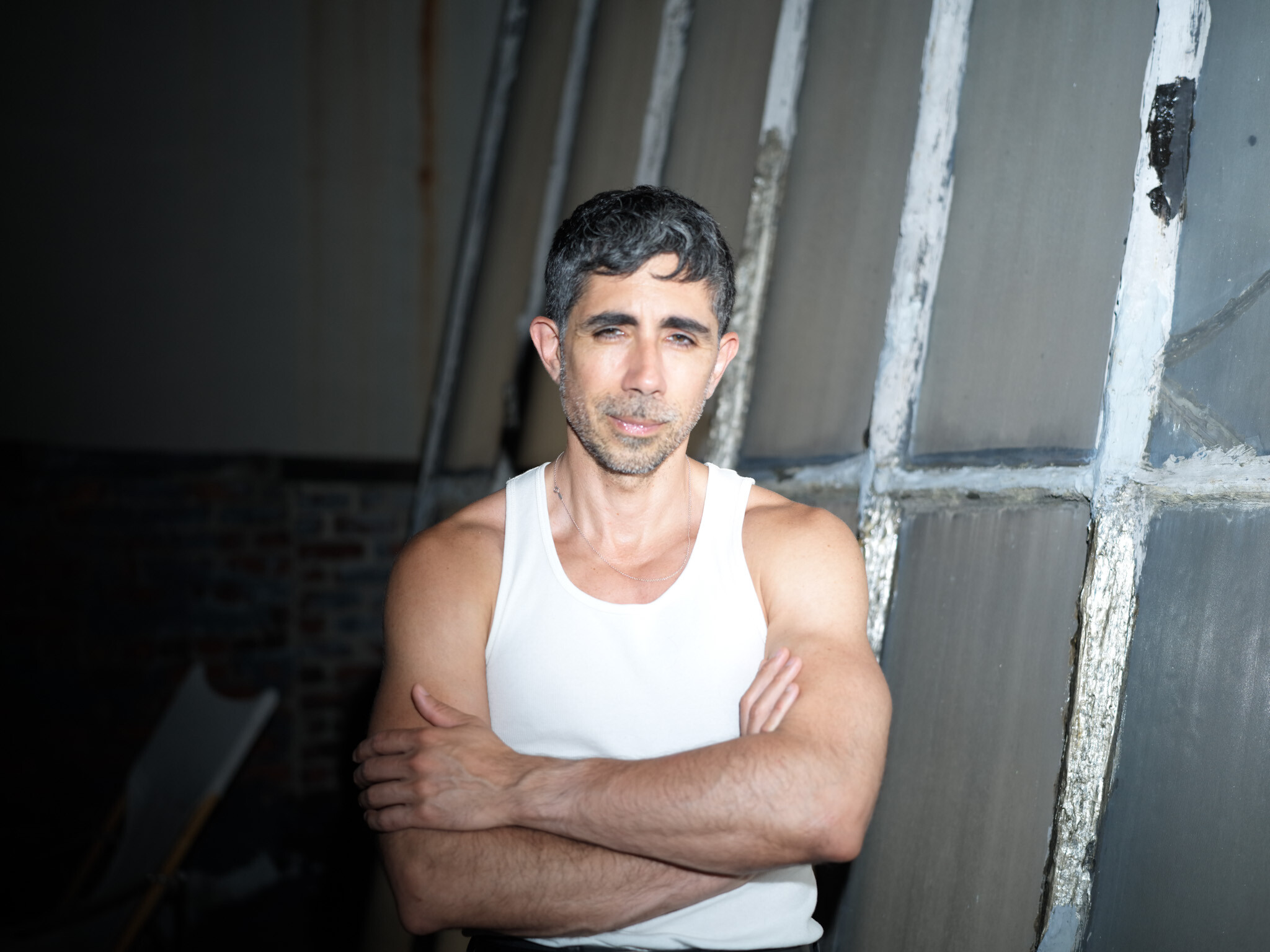
On 19 October 2023, Artforum published “An Open Letter from the Art Community to Cultural Organizations,” which calls for “an end to the killing and harming of all civilians, an immediate ceasefire, [and] the passage of humanitarian aid into Gaza.” Days later, Penske Media — which had acquired Artforum at the beginning of the year — fired editor-in-chief David Velasco. Nearly half the editorial staff, including editor Kate Sutton, resigned in protest of Velasco’s dismissal, and more than seven hundred artists and writers signed onto a boycott of Penske publications, which has since been ratified by the Palestinian Campaign for the Academic and Cultural Boycott of Israel (PACBI). On 14 March 2024, Artforum named Tina Rivers Ryan as editor-in-chief. No changes were made to the managerial team responsible for Velasco’s discharge. In this conversation, Velasco and Sutton reflect on the situation and Ryan’s debut issue for Summer 2024.
This article apperas in Issue 2 of Memo magazine. Order here.
***
Kate Sutton
It’s been more than six months since everything went down with Artforum, but the conversation still feels very unsettled, and just as relevant.
David Velasco
I’ve been talking to many Palestinian artists and scholars who’ve been approached to participate in some kind of package on “Israel / Palestine” in the Summer issue. Many didn’t know that there’s a boycott, or they didn’t know details of what happened at the magazine in October, just that I was fired, that some people quit. As time passes, the danger is that people forget, or they assume that things have been addressed or resolved.
KS
Well, it doesn’t help that a month or so back, the new editor-in-chief, Tina Rivers Ryan, issued a statement reaffirming the magazine as a place for free speech but neglecting to address that she has this position because the person who had it before her was fired for sharing a letter in support of Palestine. But it raises the question of what an ideal response would have been. Because I can fully imagine people looking at the Summer issue and saying, “Hey, they put a Palestinian artist on the cover, isn’t that great? Doesn’t that show that change has been effected at the magazine?”
DV
Palestinian voices were very much a part of the magazine before Penske. The cover of The Museum Now issue in Summer 2021 was an installation shot of Nida Sinnokrot’s work at the Palestinian Museum, which was tied to a conversation with then-director Adila Laïdi-Hanieh. We had major features on Basel Abbas and Ruanne Abou-Rahme and Jumana Manna in 2022. It’s not like suddenly Palestinian artists are now welcome.
What’s at stake is that at a critical moment in history, when editors chose to amplify the voices of thousands of artists and cultural workers who hoped to make a direct and immediate impact in Gaza, the publishers sided with a handful of advertisers. How are we to have confidence in the magazine’s owners when we know that this is how they will respond under pressure? So, yes, of course we want magazines to be elevating Palestinian voices — at this moment and always. What we don’t want is for this magazine to exploit Palestinian voices to whitewash the brand.
What’s an ideal response? For the magazine to be handed over to owners who could properly care for it. Because as I see it now, there’s no path for the magazine to restore trust in its current ownership.
KS
After the letter was published, many of the artist signees found themselves targeted, with people trying to sell their works, cancel their shows, or get them dropped from their galleries. It was the first time many of them had encountered that kind of coordinated campaign. But for others, especially internationally, that kind of pressure is normal. It’s great that the magazine wants to give exposure to Palestinian artists, but it seems they are only doing so in a moment when it feels convenient, when the risk is lower, when more of the global community is recognising the calamity of the Israeli occupation.
DV
When we published the open letter on 19 October, it was the eve of Israel’s ground invasion in Gaza, and we were hoping, very naively of course, that we might have even the tiniest impact on the conversation. It was professionally risky for the people who signed, and that risk is part of what gave it impact.
I’ve consistently been surprised by people who have told me, “Oh, well, the letter made people angry, so it wasn’t effective.” And I’m like, “No, that means it was effective.” When you’re working with a platform of this kind, you want to make use of it, you want things to have impact. Impact often looks like division. You create an opportunity for people to clarify where they stand.
Of course, risks also demand solidarity — you need people who are going to stand by the thing that they signed. Even if — especially if — there’s pressure. Every person who took their name off that list put everybody else at risk. They weakened the contract of solidarity. This isn’t about individuals. This isn’t about you and your career.
Returning to the boycott, there have been people who called to ask me how I would feel about them participating in the Summer issue. Feelings are facts, but they’re poor foundations. It doesn’t matter how I feel. I do have feelings about it, but that’s not what matters. What matters is that there are more than seven hundred people who signed on to a boycott of the magazine and other Penske publications. There’s a PACBI boycott, too. So this is about the solidarity and security of the people who are taking a stand. Everybody who contributes to the magazine right now is, in effect, putting those seven hundred people at risk. They’re saying fuck you.
Tina attempting — and failing, it seems — to put together an issue about Palestine at this stage and claiming that it’s in some way a continuation of the magazine’s commitment to activism and advocacy — that’s gaslighting. She’s using the magazine’s once valuable reputation to bait precarious artists. Having just read her first editor’s letter in the Summer issue, I’m amused that she can “acknowledge” that people have been punished for pro-Palestinian views, and yet she can’t acknowledge that the very reason she has her job is that I was fired for publishing a statement in support of Palestinian liberation. Tina’s letter is a shining example of how institutions cynically perform “acknowledgement” to obfuscate an issue.
KS
Meanwhile, the artists and writers who have boycotted the magazine are giving up access to a very powerful platform. Especially now, when there are so few opportunities for that level of critical discussion of art on a global scale.
DV
This is the very moment when refusal is most important. And in that way, it recalls the situation with the Whitney Biennial and Warren Kanders. As you know, in 2019, we commissioned and published a piece called “The Tear Gas Biennial” written by Tobi Haslett, Hannah Black, and Ciarán Finlayson. For context, Decolonize This Place and W.A.G.E. had attempted to mobilise a boycott before the Whitney Biennial opened, to protest the fact that the then-vice chairman of the Whitney Museum was Warren Kanders, the CEO of the weapons manufacturer Safariland, whose tear gas canisters were being used at the US border, against Black Lives Matter and pipeline protesters, and even in Palestine. There were protests at the museum, and Michael Rakowitz pulled his works in advance. These were critical first steps, but Kanders was still on the board.
A few months into the Biennial, Hannah, Tobi, and Ciarán decided to make a case for why artists should still boycott, even if they were already in the show. It’s such a skilful and moving argument, and one of the pieces that I’m most proud of publishing. Anybody who wants to think critically about how to do politics with art should read it. We published that and then, two days later, we published an open letter signed by four artists in the Biennial — Korakrit Arunanondchai, Meriem Bennani, Nicole Eisenman, and Nicholas Galanin — who decided to boycott the show. A few days later, Kanders resigned. I bring it up because of the points that Tobi and Hannah and Ciarán make. I will quote them, as they phrase it so beautifully: